Why AI without architecture produces chaos
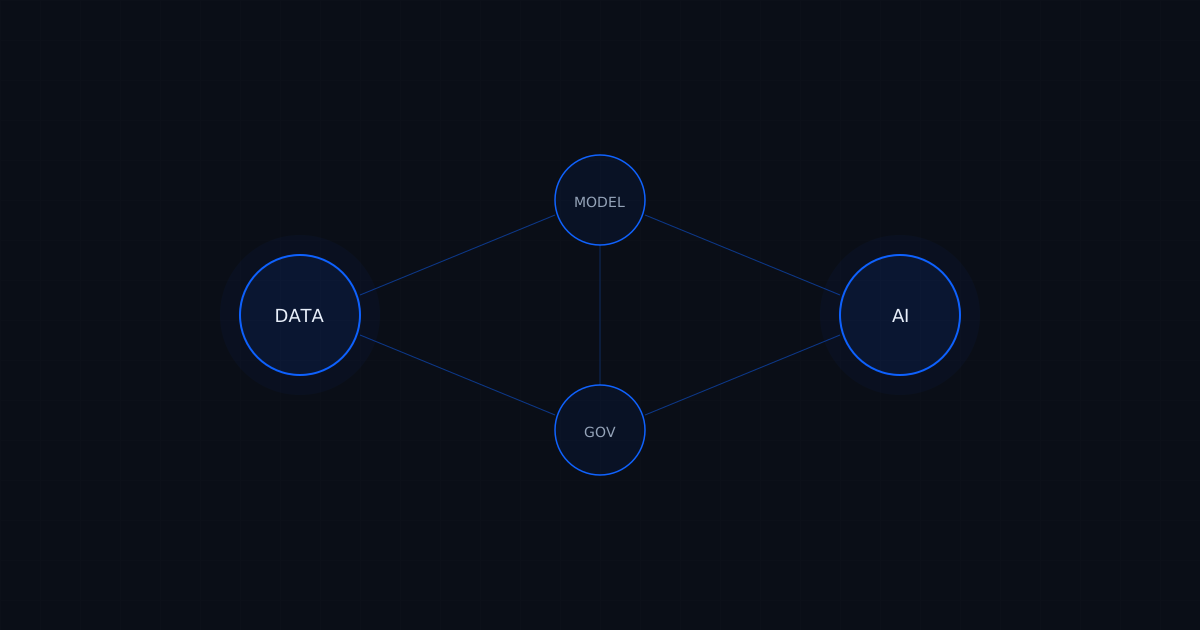
AI accelerates everything - including disorder
Enterprises are launching AI initiatives at an unprecedented pace. Chatbots, document automation, internal agents, predictive scoring. Every department pilots its own use case.
The result: a proliferation of disconnected solutions, duplicated data, ungoverned models, and infrastructure that cannot keep up.
The real problem is not technical
Most enterprise AI failures do not come from a bad model or insufficient data. They come from a lack of structure:
- No data flow mapping
- No governance of deployed models
- No integration architecture between existing systems and new AI components
- No coherent vision across initiatives
Architecture as a prerequisite
Before deploying the next agent or the next pipeline, the structural question is: how does this element fit within the overall system?
A clear enterprise architecture enables organizations to:
- Identify integration points before building
- Govern models and data end to end
- Avoid redundancies and conflicts between initiatives
- Create a decision framework for prioritizing use cases
Conclusion
AI is not a project. It is a capability that spans the entire organization. Without architecture, that capability produces fragmentation. With architecture, it produces momentum.